


Maya's Mares
If at first you don’t succeed, you are probably riding a mare.
- Dana’s Doodles
You don't train a thousand-pound flight animal. You convince her to trust you more than her instincts.
- Anonymous

Giving mares the time, training, and leadership they deserve
An alarming number of mares find themselves in animal welfare centers after a spiral of bad experiences due to human-equine miscommunication and a lack of leadership.
"Mare-ish": a slang term describing moody, stubborn, or sensitive behavior observed in a female equine (mare). Common traits include ear-pinning, irritability, and reduced focus. Often attributed to hormonal changes, such "bad" behavior can also signal discomfort, pain, or confusion rather than just being a "typical mare".
Everyone wants the well-mannered equine; few are able or willing to put in the work to get (and keep) one. Inconsistent training or a misunderstanding of human-equine relationships can lead to decreased time investments, increased owner turnover, and a vicious cycle of confusion-fear-bad behavior.
We find mares are slower to trust than their male counterparts and more likely to take dominant roles in the absence of a human leader, often leading to them becoming mislabeled as a "problem".
Thanks to a generous gift from the Maya Auchincloss Trust, Maya’s Mares was created to address this situation directly. Embodying RES's values of integrity, courage, compassion, education, and fun, this program takes a deliberate approach to understanding mares and developing best practices for humans to earn respect, then willingness, then trust as a herd leader.
Meet the Mares
Patience. Humility. Self-awareness
Mireya
Thoroughbred red mare born in 2018 who suffered an injury during her off-track-betting career and never returned. Rehomed several times, she came to her forever home at RES after her previous rescue felt Mireya would not be good fit for riding and has physical or psychological issues requiring an experienced handler. Notes from other rescues: "Increased irritability and intolerance for handling and daily cares. First trim...attempted unsedated; very agitated from all of the flies and kicked out several times with both hind legs. Able to briefly trim front hooves...Will sedate for next trim.”

...Now at peace with her farrier
Tesha
Thoroughbred red mare born in 2017 who once ran through her handler and hospitalized the veterinarian with a concussion. Tesha's notes when transferred to RES included, "Doesn’t blanket, explosive in small areas, selective of her people, needs to be alone for farrier and fed during farrier time. Doesn’t like her mouth to be handled, high anxiety, feet can be done when given lots of treats."

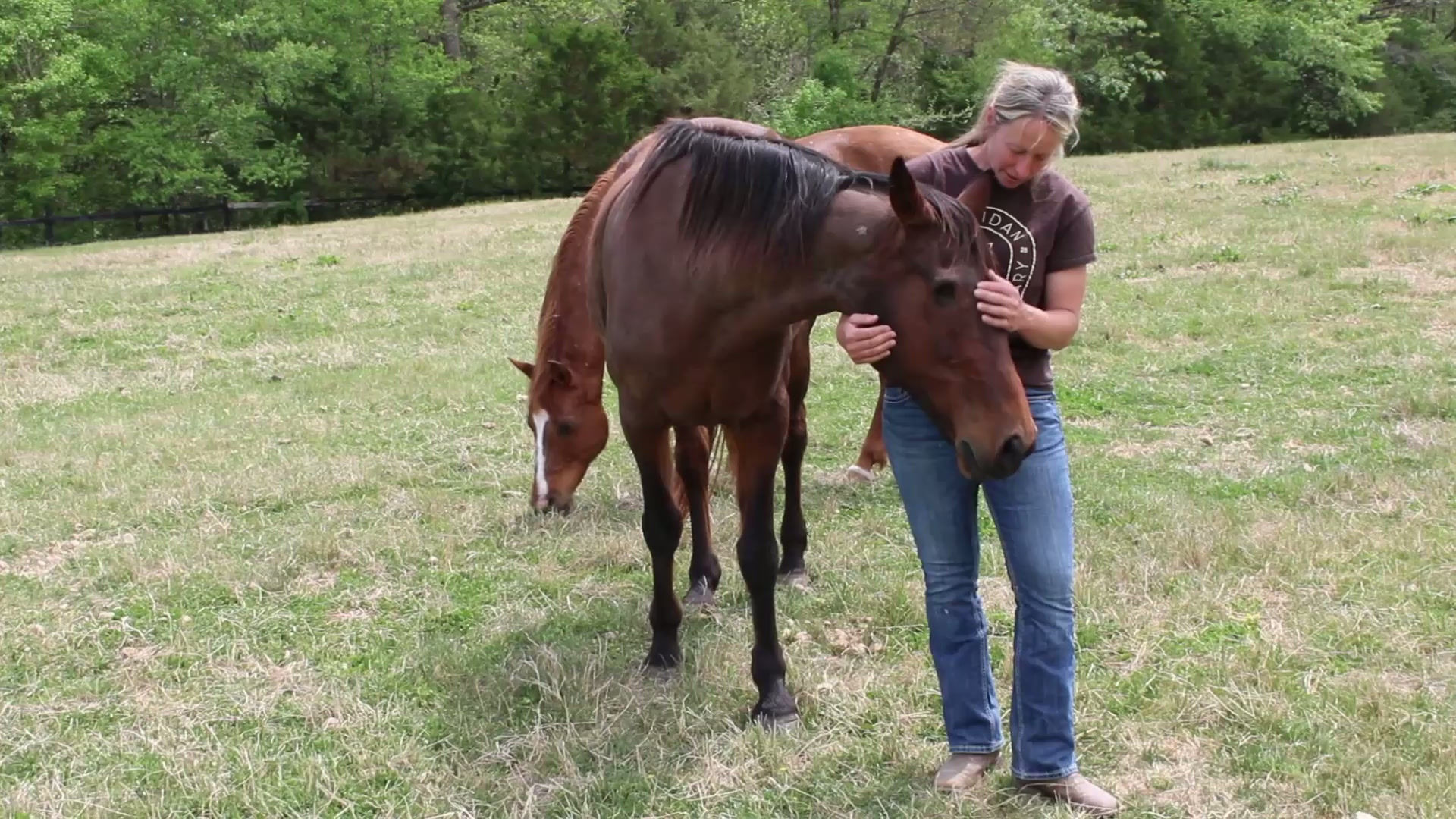
...Walking with Kim in the round pen
Princesse
Fleabitten grey mare born in 2004 and rescued from a stall in mud and manure up to her knees. Rehomed with a foster after entering the rescue world only to be returned from the foster in poor condition after several years. She had a reputation for busting doors if given an opening. In her early days at RES, when someone approached Princesse in her stall, she'd instantly pin her ears, lunge at the door, and even bite at the bars. If the person remained, she would tremble. Outside of the stall she had similar, though less intense behavior.

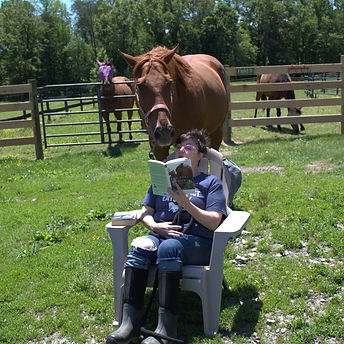
...Enjoying the sun with Donna
Babe
Paint mare born in 2000 who's been rehomed several times. Notes when transferred to RES: "Kicks out sometime when grooming, farrier & vet".

...Hanging with her RES friends
Joy
Standardbred bay mare born in 2000 who raced in her early years and had several homes since. Joy had her right eye removed for unknown reasons. Notes about her behavior when transferred to RES included, "Does not blanket well and afraid of going through gates".

...Taking on her fear of gates with Cindy
Keys To Equine Leadership:
Humility - Patience - Self-Awareness
Of all the animals with whom humans interact, equines are the least like us, yet we ask the most of them.
Imagine the trust it takes a prey animal
to allow a predator to sit on its back.
Building trust in you is essential to interacting with equines. In your own human experiences, you'll recall the frustration of a leaderless group versus one with a humble, patient, self-aware leader who gives clear guidance and direction with confidence.
The desire for a leader is observed most strongly in mares, as compared to geldings who lose some of their natural hormones at castration. This urge for a leader is so intense, a mare will reluctantly step into the role if no one (equine or human) comes forward.
We humans are so different from equines. Humility requires not just understanding, but acting on a belief that "the human way" isn't always best. Staying humble keeps you open to a equine's signals, to learn from them, and to always see them both as prey animals and as having individual personalities.
The minute we lose patience we lose the ability to lead. Your frustration and reactivity undermine a mare's confidence that you'll keep her safe from the lions, uphold the social order, lead her to good pasture and water, and otherwise make decisions that ensures the herd will persevere...a role she'd likely take in a wild herd.
Being a flight animal, equines are aware of every move we make around them – it is their nature for survival. They are constantly scanning for signals of who's a threat, who's safe, and who's in charge. Maintaining consistent self-awareness, including our state of tension or relaxation, what our feet are doing, where we're looking, and the clarity and confidence of our communication is key to effectively leading.
At RES, we strive to improve ourselves in these three areas with our residents (especially our mares) every day. Becoming better leaders improves our relationships with the equines, which in turn leads to healthier, happier equines.
We invite you to carry this philosophy into your own interactions with equines - at RES or wherever you encounter them - and discover how becoming better for an equine can make life better for both of you.
